








Flange pressure classes explained: what Class 150, 300 and PN16 really mean
One of the most common mistakes in flange purchasing is reading the class number as a pressure. A Class 300 flange is not rated for 300 psi, and a PN16 flange is not merely a metric version of something else. Class and PN are shorthand for a family of dimensions whose pressure capacity depends on material and temperature. This article explains the logic so you can specify flanges with confidence instead of copying the last project's spec.
Where the class system comes from
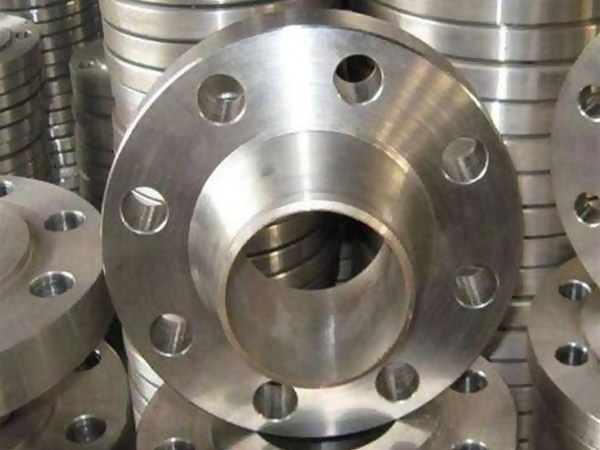
ASME B16.5 sorts flanges from NPS 1/2 through NPS 24 into classes 150, 300, 400, 600, 900, 1500 and 2500. Each class fixes a set of dimensions: flange diameter, thickness, hub size, bolt count and bolt circle. Heavier classes mean thicker flanges, more bolts and larger diameter bolts, all sized so the joint holds a defined pressure at a defined temperature without excessive gasket stress or bolt stress.
The system descends from the old steam water ratings. The numbers survive as labels only. A Class 150 carbon steel flange, for instance, holds about 14 bar at room temperature but closer to 7 bar at 400 degrees Celsius. The same class in a stronger material group carries more at both temperatures. The rating lives in the pressure temperature table of the standard, not in the stamped number.
Temperature pulls the rating down
Every class derates as temperature climbs, and the reason is plain metallurgy. Yield strength falls with heat, bolts relax, and gasket materials creep. B16.5 publishes the allowable working pressure for each material group at a ladder of temperatures, and the drop is steep for carbon steel in the 300 to 500 degree range. A line that runs 40 bar cold and 40 bar at 350 degrees needs a class chosen for the hot condition, not the cold one.
Cold service has its own trap. Standard carbon steel forging grades lose toughness below zero, so refrigerated and cryogenic lines specify low temperature materials, with impact testing at the design temperature backing the choice. The class stays the same, but the material grade changes, and the certificate must prove the impact values.
PN ratings: the metric cousin
European standards under EN 1092 use PN designations, PN 2.5 through PN 400, where the number is the nominal allowable pressure in bar at ambient temperature. PN16 and PN25 are the everyday workhorses of European water and process piping, while PN40 and above cover higher duty. The PN system is more transparent than the class system, but it still derates with temperature through the material tables, so the same care applies.
Class flanges and PN flanges do not bolt together. Bolt counts, bolt circles and even flange ODs differ between the systems for the same nominal size. When a project mixes equipment sourced from different traditions, someone must check every bolted interface against the drawings, because "same size" is not the same as "same drilling". A flange manufacturer that works in both systems can supply either, but only if the order says which standard governs.
Choosing a class in four steps
Start with design pressure and design temperature for the line. Second, find your flange material in the B16.5 material group table. Third, read across the pressure temperature table for that group and pick the lowest class that exceeds your design pressure at your design temperature, with margin for upset conditions. Fourth, check the connected equipment, pumps, valves, vessels, and match or coordinate the class across the joint, since the joint is only as strong as the lighter side.
Safety factors beyond that are usually wasted money. Two classes of margin on a 2 inch utility line adds flange weight, bolt torque and stud cost with no gain. Spend the effort instead on correct gasket selection and clean facing finishes, which is where most flange joints actually succeed or fail.
Bolting deserves a mention alongside the class. Heavier classes take larger studs with higher torque, so the stud material, typically ASTM A193 B7 with A194 2H nuts for temperature service, must keep pace with the flange rating. A Class 600 joint tightened with unspecified hardware is not a Class 600 joint. Most flange manufacturers can supply matched bolting with certificates, which removes one more mismatch risk from the joint.
When a supplier quotes flanges, ask them to state class, material group and facing in the offer. A quotation that reads "6 inch, Class 150, A105, raised face, serrated" leaves nothing to interpretation, and interpretation is where flange projects go wrong.
References
ASME B16.5, Pipe Flanges and Flanged Fittings NPS 1/2 Through NPS 24 Metric/Inch Standard, American Society of Mechanical Engineers, New York, 2017 edition.
EN 1092-1, Flanges and Their Joints: Circular Steel Flanges for Pipes, Valves, Fittings and Accessories, PN Designated, European Committee for Standardization, Brussels.
ASME B31.3, Process Piping, American Society of Mechanical Engineers, New York.
Charles Becht IV, Process Piping: The Complete Guide to ASME B31.3, 3rd edition, ASME Press, New York, 2016.