








Flange face types: raised face, flat face and ring type joint explained
Most flange leaks are not caused by the bolts or even the gasket. They trace back to the sealing face, the machined surface where the gasket actually does its work. ASME B16.5 recognizes several facings, and each one exists because a particular combination of pressure, temperature and gasket needed it. Understanding the three common faces helps you order the right flange the first time and diagnose a leaking joint when one appears.
Raised face: the default choice
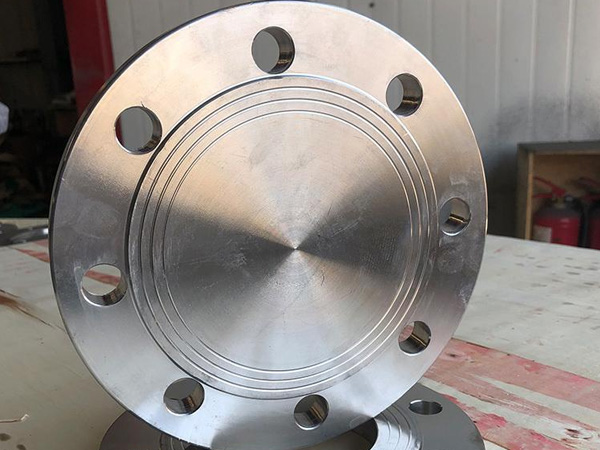
A raised face flange carries its gasket on a raised ring, standing about 2 mm proud of the bolting surface in the Class 150 to 400 range and about 7 mm for Class 600 and above. The raised ring concentrates bolt load onto a small area, so the gasket reaches seating stress at modest torque. When the joint pressurizes, the internal pressure pushes against the raised ring and adds to the gasket load, a self sealing behavior engineers appreciate.
Raised face pairs with the full range of soft gaskets, compressed fibre sheet, PTFE based materials, and with spiral wound gaskets that sit inside the bolt circle. It suits water, steam, hydrocarbons and most process fluids from vacuum through the mid pressure classes. Unless your specification says otherwise, a flange manufacturer will quote raised face by default.
Flat face: for brittle and delicate mates
A flat face flange has no raised ring. The whole gasket contact area sits level with the bolting surface. The reason is mechanical rather than sealing performance. When a raised face flange bolts up against a brittle material such as cast iron, a plastic or a glass lined component, the bolt load bends the mating flange across the raised ring and can crack it. A flat face spreads the load over the full face and removes that bending.
Flat faces appear on cast iron pump casings, ductile iron waterworks fittings and equipment nozzles where the manufacturer knows the mating flange may be fragile. They also suit full face gaskets, which cover the entire flange face including the bolt holes and are common in water treatment and low pressure chemical duty. When connecting a steel flange to a flat faced component, order the steel side flat as well, since a standard raised face would seat on the fragile part and undo the whole point of the design.
Ring type joint: metal seals for severe service
Ring type joint facings, RTJ, machine a groove into each flange face. A solid metal ring, oval or octagonal in cross section, sits in the paired grooves. As the bolts tighten, the flange faces nearly meet and the ring yields into the groove flanks, forming a metal to metal seal that resists high temperature and high pressure where organic gasket materials would relax, creep or burn.
RTJ is standard on wellhead equipment, high pressure steam, hydrocarbon services with hydrogen and hot oil lines. The rings are purchased separately and are normally replaced after every opening, since a used ring has already yielded and will not reseal reliably. Flange factories cut the groove to the B16.5 dimensions with a matching surface finish, and inspection usually includes a gauge check of groove depth and pitch diameter before the flange ships.
Surface finish: the detail that decides the seal
B16.5 defines the standard serrated finish as 3.2 to 12.5 micrometers average roughness, cut by a continuous spiral or concentric tool path from the outside in. The micro grooves bite into a soft gasket and stop it from sliding or blowing out. Spiral wound gaskets with graphite or PTFE fill often call for a smoother finish, and some clients specify a phonographic or mirror finish for special services.
The facing operation is the last machining step, so ask the flange supplier to protect the face after cutting. A finished face scuffed by chain sling marks will still look fine to the eye but no longer seat a gasket evenly. Packing with face to face spacers or boards costs the factory almost nothing and saves the site a grinding session.
Choose the facing the same way the standard does: raised face for ordinary steel to steel joints, flat face where the mate is brittle or the gasket is full face, and ring type joint where pressure, temperature or the fluid itself demands a metal seal. The gasket and the facing should always be picked as a pair, because they are one mechanism, not two parts.
References
ASME B16.5, Pipe Flanges and Flanged Fittings NPS 1/2 Through NPS 24 Metric/Inch Standard, American Society of Mechanical Engineers, New York, 2017 edition.
ASME B16.20, Metallic Gaskets for Pipe Flanges: Ring-Joint, Spiral-Wound, and Jacketed, American Society of Mechanical Engineers, New York.
Mohinder L. Nayyar, Piping Handbook, 7th edition, McGraw-Hill, New York, 2000.
ASME B16.21, Nonmetallic Flat Gaskets for Pipe Flanges, American Society of Mechanical Engineers, New York.