








Carbon steel vs stainless steel pipe fittings: making the right call
Every piping material decision starts with the same question: will carbon steel do the job, or does this line need stainless? The price gap between the two is significant, so the answer matters on any bill of materials. But choosing by price alone causes failures in both directions, rusty stainless lines that were specified badly, and stainless bought for no reason at all. Here is how experienced engineers and pipe fittings manufacturers approach the choice.
What each material is, in practice
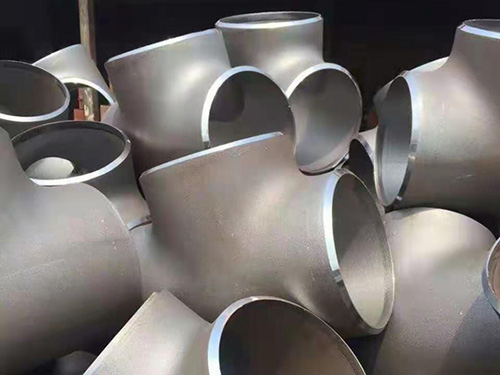
Carbon steel fittings for welded piping normally come under ASTM A234 Grade WPB, matching A106 Grade B pipe. The grade contains roughly 0.3 percent carbon with manganese for strength, and it serves water, steam, oil and gas from cold through about 425 degrees Celsius. It is cheap, weldable with ordinary procedures and available in every shape and size from stock or short lead time.
Stainless fittings are dominated by the austenitic family under ASTM A403. Grade WP304 resists general corrosion, and WP316 adds molybdenum, which buys real protection against pitting in chloride environments. The low carbon variants, WP304L and WP316L, limit carbide precipitation during welding and have largely replaced the straight grades in modern fabrication. Duplex and super duplex grades handle tougher chloride duty, at a further step in price and with stricter welding controls.
Corrosion: the honest picture
Carbon steel rusts wherever water and oxygen reach it, so it lives behind paint, coatings or insulation and cladding. It handles dry hydrocarbons and high temperature steam well, but give it standing condensate, sea water spray or acidic condensate and the wall loss is measurable within months. Corrosion allowance, typically 3 mm on process lines, is the design response: accept some loss and order the schedule thicker.
Stainless does not rust the same way because its chromium content forms a passive film that repairs itself in air. The film fails in specific ways: pitting and crevice attack from chlorides, stress corrosion cracking above about 50 degrees Celsius in chloride solutions, and sensitization of welded non L grades. That means "stainless" is not automatically the answer to every wet service. 304 serves fresh water, food duty and many chemicals, while coastal, marine and brackish applications usually justify 316 or better.
Welding and fabrication differences
WPB carbon steel welds with standard procedures and common consumables, and post weld heat treatment only enters the picture for thick walls or sour service. Stainless needs cleaner practice: purging with argon on the root side to prevent sugaring, low heat input to avoid sensitization, and pickling or passivation of the finished weld area to restore the corrosion resistance the heat affected zone lost. A fittings factory that runs both materials keeps separate grinding stations and separate handling to avoid carbon steel contamination embedding in stainless surfaces.
Stainless also galls and work hardens, so machining takes slower speeds and sharper tooling. None of this is difficult, but it means the fabrication cost of stainless exceeds the material premium. Buyers comparing quotes should ask whether welding consumables, purge gas and pickling are included rather than discovering them as site extras.
The decision, made simple
Choose carbon steel when the service is dry or the corrosion protection is reliable and cheap to maintain: plant air, steam, cooling water with inhibitor, hydrocarbons above the water dew point. Choose stainless when the product itself is corrosive, when cleanliness matters as in food, pharmaceutical and clean water duty, when chloride exposure is routine, or when maintenance access is so poor that repainting is impractical. In marginal cases, run the whole life calculation, material plus maintenance plus failure risk, not just the invoice comparison.
One habit worth copying from the chemical industry: when in doubt between 304 and 316 for outdoor or coastal service, take the 316L. The incremental cost at the pipe fittings supplier is small compared with replacing a corroded line inside the design life.
Availability also plays a part in the decision. Carbon steel fittings in common sizes and schedules sit in stock at most factories, with standard grades shipping within days. Stainless shapes are produced continuously, but the grade variety is wide, and exotic items such as duplex tees or heavy wall 316L reducers may need a dedicated forming run. Planning orders around the factory production schedule costs nothing and usually beats expedite fees by weeks.
Both materials have earned their place over a century of piping. The right call comes from the service conditions on the line list, and those deserve five minutes of attention before the purchase order goes out.
References
ASTM A234/A234M, Standard Specification for Piping Fittings of Wrought Carbon Steel and Alloy Steel for Moderate and High Temperature Service, ASTM International, West Conshohocken, PA.
ASTM A403/A403M, Standard Specification for Wrought Austenitic Stainless Steel Piping Fittings, ASTM International, West Conshohocken, PA.
Mohinder L. Nayyar, Piping Handbook, 7th edition, McGraw-Hill, New York, 2000.
ASM International, Metals Handbook, Volume 1: Properties and Selection: Irons, Steels, and High-Performance Alloys, ASM International, Materials Park, OH.