








Butt weld pipe fittings: what buyers need to know
If you buy piping components for a project, chances are most of the line is joined with butt weld fittings. The weld is made directly between the fitting bevel and the pipe end, with no threaded or flanged joint in between. That gives you a smooth bore, a strong connection, and a joint that will not leak just because someone tightened a bolt wrong. This guide walks through the main fitting families, how they are sized, and the details worth confirming with a pipe fittings manufacturer before you order.
The four shapes you will order most
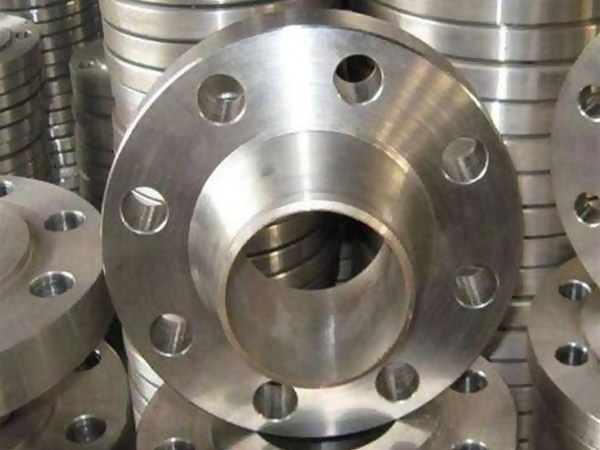
Almost every welded line can be built from four basic fittings. Elbows change direction, and the common angles are 45 and 90 degrees. Tees either split one stream into two or bring two streams together, and they come in equal and reducing versions. Reducers connect pipes of different diameters, either concentric, which keeps the centerlines aligned, or eccentric, which keeps one side flat. Caps seal the end of a line, usually as a temporary or permanent closure.
Each shape answers a specific piping problem, so most bills of material are simply combinations of these four items in different sizes and wall thicknesses. Stub ends, used with lap joint flanges, and crosses, used where a fourth branch is genuinely needed, round out the list. A factory that presses, forges and pushes its own fittings can usually supply the whole range from one heat of material, which matters when you need consistent traceability across a spool.
Sizing: nominal size and schedule go together
Butt weld fittings in the inch series are ordered by nominal pipe size (NPS) and schedule, not by measured outside diameter. A 6 inch schedule 40 elbow has the same bore and wall dimensions as the 6 inch schedule 40 pipe it joins. The schedule must match at the weld line. An elbow with a heavier wall than the pipe can be welded in with proper root preparation, but a thinner wall cannot.
For elbows you also choose the radius. A long radius elbow has a centerline radius of 1.5 times the nominal size, and this is the default for most services because pressure drop stays low. A short radius elbow, with a radius equal to the nominal size, fits tight layouts but nearly doubles the resistance through the turn. Three, four and five diameter radius elbows are pushed to order for pigging lines and compressor piping, so if your spec calls for them, say so early and expect a longer lead time from the supplier.
Materials and the standards behind them
The most common material callout for welded carbon steel fittings is ASTM A234 Grade WPB, which pairs with A106 Grade B pipe. Alloy grades such as WP11, WP22 and WP91 cover elevated temperature service in power and refinery work. Wrought austenitic fittings fall under ASTM A403, with WP304, WP316 and the low carbon variants such as WP316L as the workhorses. The dimensional bible is ASME B16.9, which fixes outside diameter, wall thickness, center-to-end dimensions and tolerances for fittings from NPS 1/2 through 48.
One point that catches new buyers: B16.9 fittings are defined by their matching pipe, so a fitting marked schedule 80 is verified by measuring wall at the welded end and by the hydro test or calculation that backs the rating. When a manufacturer offers material test reports, check that the chemistry and tensile values on the report match the grade stamp, not just the order confirmation. Mill certificates from the fitting producer, plus third party inspection for critical lines, close the loop.
What to confirm with the factory before ordering
Four details cause most rework and disputes. First, the bevel angle, standard is 37.5 degrees for heavier walls, but some EPC contractors ask for a compound bevel. Second, heat treatment, because hot formed alloy fittings must be normalized or tempered and the certificate should say so. Third, dimensions on reducing fittings, since the run and branch outlets need to be called out clearly to avoid a tee arriving with the branch on the wrong side for your orientation. Fourth, packing, because thin wall stainless fittings scratched in transit will still weld, but pickling and inspection costs you time.
A pipe fittings factory that presses its own elbows, machines its own faces and runs its own spectrometer can usually hand you inspection data before shipment. Ask for it in the purchase order rather than after the goods arrive. The EN 10204 3.1 certificate, dimensional report and any radiography or ultrasonic test records should all reference the same heat number that appears on the fitting stamp.
Buying butt weld fittings is not complicated once the schedule, radius and material grade are pinned down. Get those three right, put the certificate requirements in writing, and the rest of the order usually follows without surprises.
References
ASME B16.9, Factory-Made Wrought Buttwelding Fittings, American Society of Mechanical Engineers, New York, 2018 edition.
ASTM A234/A234M, Standard Specification for Piping Fittings of Wrought Carbon Steel and Alloy Steel for Moderate and High Temperature Service, ASTM International, West Conshohocken, PA.
ASTM A403/A403M, Standard Specification for Wrought Austenitic Stainless Steel Piping Fittings, ASTM International, West Conshohocken, PA.
Mohinder L. Nayyar, Piping Handbook, 7th edition, McGraw-Hill, New York, 2000.