








Pipe Caps and End Caps: Purpose, Standards, and a Buying Checklist
Every so often a pipe just has to stop. Maybe a line is being extended later, maybe a vessel nozzle is waiting for equipment, or maybe a spool is heading for the paint shop and needs its ends protected. The fitting that closes things off is the pipe cap, and while it looks like the simplest part in the warehouse, there is more to specifying one than you might expect. A cap holds full line pressure against a blank wall, so it earns its place in the engineering, not just the stores catalog.
What pipe caps are for
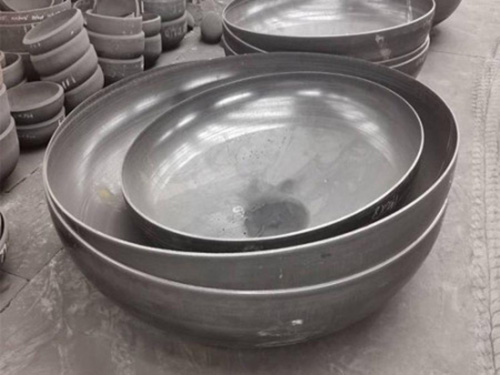
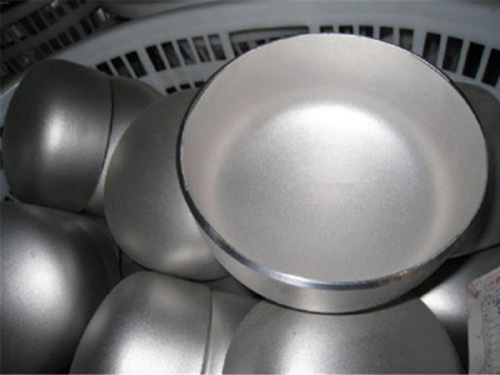
A pipe cap seals the open end of a pipe, valve, or vessel. Unlike a blind flange, which bolts onto a flanged joint, a cap is welded directly to the pipe end. That makes it a permanent or semi-permanent closure. Caps are used to terminate dead legs, to blank off branches that may be tied in later, to protect pipe ends during transport and storage, and to close the ends of pressure vessels and headers.
Common cap styles
The most common style for piping is the butt weld cap, a domed closure with a straight cylindrical skirt that matches the pipe diameter and is beveled for welding. There are also hemispherical caps, used on the ends of pressure vessels where the shape distributes stress most evenly, and flat caps for low pressure duties. Small threaded or socket weld caps handle instrumentation and utility lines where welding is awkward.
Standards and dimensions
Butt weld caps follow a recognized dimensional standard that fixes the outer diameter, length, and end preparation so the cap will match standard pipe. The thickness is governed by the same pressure and temperature considerations as any other fitting, and for critical service the cap may need to be designed rather than picked from a table. A vessel head is a different animal again, sized and stamped to a pressure vessel code.
Thickness and pressure rating
It is tempting to treat a cap as low risk because it has no moving parts and no gaskets. Do not. The domed face of a cap sees the full internal pressure over a large area, and a thin cap in a hot or cyclic line can deform or crack. Match the cap thickness to the pipe schedule, and check the rating at design temperature. For high energy service, ask whether the cap needs to meet a specific design standard rather than a general one.
How caps are made
Caps are usually made by deep drawing or pressing a steel plate into a dome, then machining the skirt and bevel. Hot forming is common for larger sizes and thicker walls, and the formed cap is normally heat treated to restore its properties. The forming process can thin the crown of the cap, so measurement of the finished thickness matters, and a good factory will record it.
Installation notes
A weld cap is not a plug you knock into place; it becomes part of the pressure boundary. That means the weld is a full strength joint and usually requires inspection. Trapped air or moisture inside a capped dead leg can cause corrosion from the inside over time, so think about whether the closure should be vented or drained, or whether the dead leg should be eliminated entirely in the final design.
Storage and shipping protection
Caps are often bought purely to protect pipe ends on the journey to site, and in that role the requirement is looser but still real. A protective cap should stay on during handling and come off without leaving debris or damaging the bevel. For long term storage, a cap that seals the end completely can trap moisture and cause internal corrosion, so a vented cover is sometimes the smarter choice.
What to check when ordering
Confirm the size, schedule, material, and end finish, and check the dimensional standard the cap follows. Ask for material certificates and, for large or critical caps, the formed thickness measurement. If the caps are for shipping protection only, say so, because the requirements are far lighter and the price should reflect that.
Sourcing notes
Because caps are cheap, they are easy to overlook, and that is where the risk lives. A pipe cap manufacturer with real forming and heat treatment capability will control the crown thickness and the skirt dimensions, and will document both. When a project is under schedule pressure, the caps are often the last item ordered and the first to be shorted on quality. A steady supplier who can deliver a consistent, documented part is worth more than a rock bottom quote.
References
ASME B16.9, Factory-Made Wrought Buttwelding Fittings, American Society of Mechanical Engineers.
ASTM A234/A234M, Standard Specification for Piping Fittings of Wrought Carbon Steel and Alloy Steel for Moderate and High Temperature Service.
ASME BPVC Section VIII, Rules for Construction of Pressure Vessels, Division 1.
ASME B31.3, Process Piping, American Society of Mechanical Engineers.
Nayyar, M. L., Piping Handbook, 7th edition.