








How to select a reliable pipe fittings supplier: a practical checklist
The pipe fittings market is crowded, and the quotes all look similar until something goes wrong: a missed dimension, a certificate that does not match, a shipment that arrives a month late. Whether you are sourcing flanges, elbows or tees for a project or for resale, the supplier you pick matters as much as the price. This checklist lays out what experienced purchasing teams verify before the first order, and what separates a real manufacturer from a desk that only forwards emails.
Start with what the factory actually makes
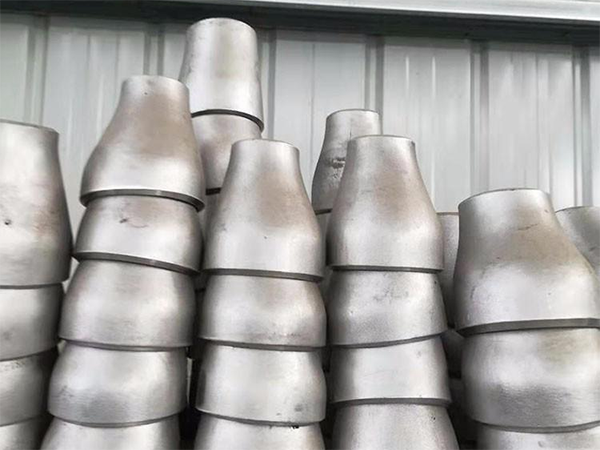
The first question is simple: does the supplier produce the fittings, or buy them from someone else? A manufacturer can answer technical questions in detail, because the people answering run the presses. Ask about forming routes, pushing versus pressing, about heat treatment schedules, and about what the spectrometer checks on each heat. Vague answers with no numbers suggest a trading company, which is not automatically bad, but it adds a layer between you and the people who control quality.
Then match capability to your actual demand. A factory set up for standard carbon steel butt weld fittings may quote stainless work, but if it lacks separate handling and pickling for stainless, surface quality will suffer. Check the size range too: a plant that presses fittings from plate up to 48 inch solves a different problem than one that only pushes small elbows from pipe. The right manufacturer for a utility order is not the right one for a Class 900 alloy line, and honest suppliers will say so.
Verify certificates and testing before the order
Every serious supplier can produce EN 10204 3.1 material certificates, dimensional reports and, for alloy work, heat treatment charts. The test is whether they offer them before you ask. Ask to see a sample certificate package from a recent shipment, with real heat numbers. Check whether the chemistry and mechanicals on the paper match the grade standard, A234 WPB, A403 WP316L, A105, and whether the stamping described matches what you would receive.
Testing equipment on site is the next signal. A direct reading spectrometer, a hydrostatic test bench, NDT capability and a calibrated measuring room indicate a factory that inspects as a habit rather than as a favor. Third party inspection, whether by an independent inspection agency or a client inspector, should be welcomed rather than tolerated. Suppliers who resist a visit or an inspector usually already know why.
Read the commercial signals honestly
Price matters, but the shape of the offer matters more. A quotation that is dramatically below the field usually omits something: certificates, proper heat treatment, the actual grade, or delivery. Compare quotes line by line, material grade, schedule, standard, certificate class, packing, incoterms, and the low one often stops looking low. Payment terms that demand full advance from a new customer, or refusal to send a mill sample, are further warnings.
Lead time and communication are equally real. Ask what the current production load is, which steps are in house, and where delays usually occur. A supplier that answers "about three weeks, four if you need third party inspection, and I will confirm the heat number by Friday" is describing a process it actually runs. One that answers "no problem, everything possible" is describing a wish.
Build the relationship the smart way
Start with a small trial order and inspect it properly, dimensions, stamping, certificates, before scaling up. Give the supplier your standing specification, grades, standards, certificate requirements, packing rules, so quality does not depend on memory. Share your project schedule honestly, because a manufacturer who sees your real deadlines can plan production around them, while one kept in the dark can only guess.
Logistics competence is easy to overlook until the first container. Fittings are dense, so packing decides whether a shipment arrives with intact bevels or with scraped faces and bent ends. Ask how the factory protects machined faces, how it separates carbon and stainless in the same box, and which export documents it prepares in house. A supplier that quotes FOB but cannot produce a packing list with piece counts and heat numbers on request will cost you slow days at customs and slower days at receiving.
Good buyers end up with one or two dependable suppliers rather than a dozen cheap ones. The audit cost, the sample orders and the clear paperwork all pay back the first time a project runs late and the supplier moves your order to the front of the line because your business was worth keeping.
References
ASME B16.9, Factory-Made Wrought Buttwelding Fittings, American Society of Mechanical Engineers, New York, 2018 edition.
EN 10204, Metallic Products: Types of Inspection Documents, European Committee for Standardization, Brussels.
Mohinder L. Nayyar, Piping Handbook, 7th edition, McGraw-Hill, New York, 2000.
Peter Smith and Thomas van Laan, Piping Materials Guide, Gulf Professional Publishing, Burlington, MA, 2005.