








Alloy steel pipe fittings for high temperature service
Carbon steel works hard, but there is a temperature above which it quietly gives up. From roughly 425 degrees Celsius onward, creep becomes the design concern, and the chrome molybdenum alloy family takes over. These are the fittings that carry steam, hot oil and reactor effluent in power stations and refineries, and they follow stricter rules than ordinary carbon steel, in material, in heat treatment and in traceability. This article explains the grades, what each one tolerates, and why the paperwork matters as much as the steel.
The grade ladder
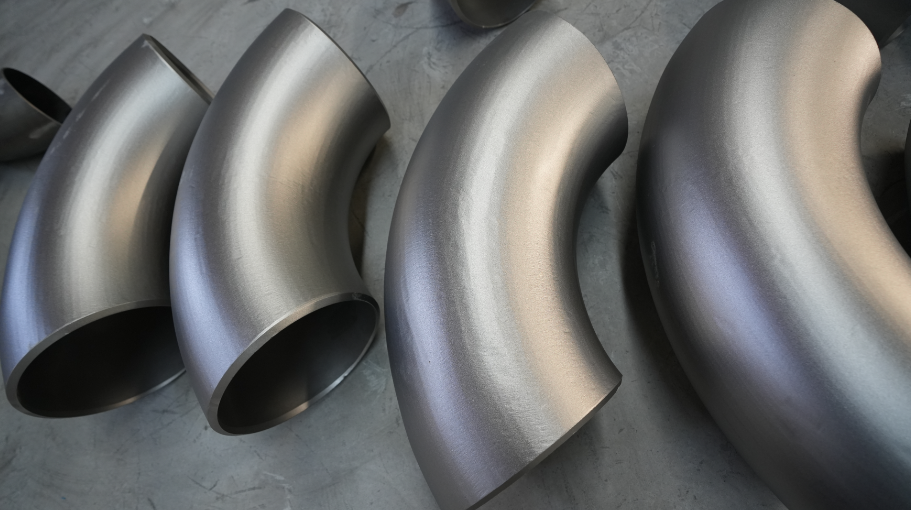
Alloy fittings under ASTM A234 follow the P number system inherited from the matching pipe. Grade WP11, 1.25 percent chromium and half a percent molybdenum, serves steam and refinery service from about 450 through 550 degrees Celsius. Grade WP22, 2.25 chromium and 1 molybdenum, extends the range toward 600 degrees, and is the classic boiler and hydrogen service grade. Grade WP91, 9 chromium steel with vanadium and niobium, carries main steam lines in modern power plants at temperatures near 600 degrees, at strengths that let designers thin the pipe walls dramatically compared with WP22.
Each step up buys temperature and strength, and each step demands more from the manufacturer. WP91 in particular is unforgiving: its creep strength depends on a precise heat treatment and on chemistry held inside narrow windows, and a fitting normalized and tempered outside the correct range looks identical to a good one and fails years later. This is why experienced buyers of WP91 ask to see furnace charts and mechanical test results before the fittings leave the supplier, not after.
Heat treatment is the whole game
Hot formed alloy fittings come out of the press with their structure disturbed. Normalizing, heating above the transformation point and cooling in still air, restores the fine grain and dissolves the forming strains. Tempering then tunes strength and toughness to the specified range. WP11 and WP22 are typically normalized and tempered. WP91 is normalized and tempered to a tight schedule, and the tempering temperature must stay well clear of the range that would undo the strengthening, a fact that forging shops respect and inspectors verify against the chart.
The certificate should state the actual treatment, temperature and hold time, not just the words "heat treated". Mechanical tests, tensile, yield, elongation and hardness, are run on the same heat and appear beside the chemistry on the material test report. For critical service, impact testing at design temperature and hardness surveys across the fitting catch the marginal batches that chemistry alone would pass. A pipe fittings factory that runs its own heat treatment furnaces with recorders can produce this evidence on request, and buyers of alloy work should request it every time.
Welding: another set of rules
Alloy fittings weld differently from carbon steel. The chrome content hardens the heat affected zone as it cools, so preheat is mandatory, 150 degrees for WP11 and WP22, higher for heavy wall, and post weld heat treatment is specified for nearly all thicknesses. WP91 welds demand strictly controlled chemistry in the consumables, careful preheat and interpass control, and a temper pass with the PWHT schedule. Skip any of that and the weld, not the fitting, becomes the weak link that fails a hydro test or an inspection.
Hydrogen service adds a further concern. Steels in hot hydrogen absorb atomic hydrogen, and chromium content is the defense, which is why 2.25 chrome is the standard callout for hot hydrogen lines. The fitting grade, weld procedure and PWHT must all agree, and the line class specification usually resolves the question long before the order is placed. The supplier's role is to deliver the grade stated, with the certificate to prove it.
Buying alloy fittings well
State the grade fully on the purchase order, WP22, not "alloy", because the WP letter codes carry specific chemistry. State the heat treatment requirement and the certificate class, EN 10204 3.1 at minimum, 3.2 when a third party countersigns for critical lines. Ask whether the manufacturer presses and heat treats in house, since subcontracted treatments are where chart records get thin. And allow realistic lead time, because alloy heats are melted in campaigns, and heat treatment slots follow production schedules.
Alloy steel fittings cost several times their carbon steel equivalents, and the premium buys service at temperatures where carbon steel cannot survive. The quality that makes the premium worth it lives in the furnace chart, the spectrometer reading and the stamped heat number. Buy the paperwork with the steel, and the line holds its pressure for the decades it was designed to run.
References
ASTM A234/A234M, Standard Specification for Piping Fittings of Wrought Carbon Steel and Alloy Steel for Moderate and High Temperature Service, ASTM International, West Conshohocken, PA.
ASME B31.1, Power Piping, American Society of Mechanical Engineers, New York.
ASM International, Metals Handbook, Volume 1: Properties and Selection: Irons, Steels, and High-Performance Alloys, ASM International, Materials Park, OH.
Mohinder L. Nayyar, Piping Handbook, 7th edition, McGraw-Hill, New York, 2000.