








Slip-on vs weld neck flanges: which one does your project need
Ask a piping engineer to justify a flange choice and the answer usually comes down to these two types. Weld neck and slip-on flanges cover the majority of bolted joints in industrial piping, and each one earns its place for different reasons. Choosing between them is not about which is better. It is about matching the joint to the pressure, the service and the budget. Here is how the two compare when a flange manufacturer builds both.
How each flange goes together
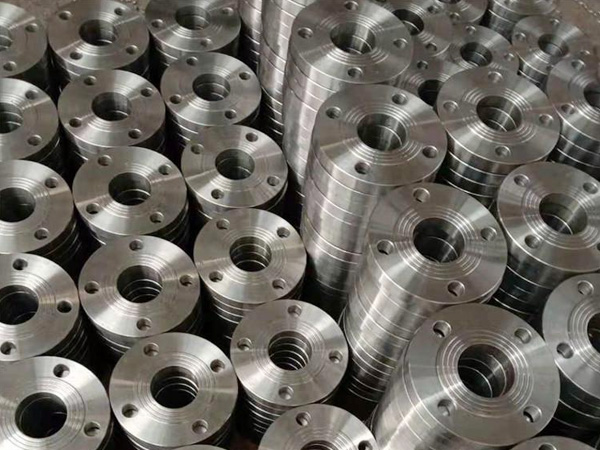
A weld neck flange has a long tapered hub ending in a single butt weld to the pipe. The weld is the same type used to join two pipes, with full penetration and a smooth bore through the joint. The hub acts like a reinforcement, spreading stress into the pipe wall so the flange handles pressure cycling without working the weld to death.
A slip-on flange, as the name says, slips over the outside of the pipe. The pipe sticks through about 6 mm past the face, and two fillet welds tie it down, one at the hub outside and one at the inside root. Total weld metal is less than a full butt weld, no beveling of the pipe is needed, and cutting the pipe to length is forgiving because the flange can slide a little for adjustment.
Strength, fatigue and the fine print
Under steady pressure both flanges hold well when properly welded, and B16.5 rates them by the same pressure temperature tables. The difference shows up under cycling, vibration and bending loads. The butt weld of a weld neck flange has better fatigue life, and most engineering companies respond by specifying weld neck for high pressure classes, lethal services and lines with temperature cycling. Slip-on remains standard fare on Class 150 utility air, water and low pressure drain lines where the loads are gentle.
Inspection is another quiet difference. A weld neck butt weld can be radiographed, so critical joints get a clear film of the root. The double fillet weld of a slip-on flange hides its root condition, which limits what an inspector can prove. If your spec requires radiography at flange welds, that requirement effectively decides the flange type for you.
Cost is more than the purchase price
The slip-on flange is cheaper to buy because it is simpler to forge and machine. The surprise for many buyers is the labor math. A slip-on joint takes two welds plus pipe end preparation that is not much faster in total weld time, and some fabricators report the installed cost of a slip-on joint landing close to the weld neck once fitting, welding and inspection are counted. The weld neck costs more at the flange supplier invoice but the single bevel weld is often faster to complete properly.
Alignment favors slip-on in the field. Because the flange floats on the pipe before the fillet welds go in, the erectors can rotate bolt holes and set the face gap late in the sequence. Weld neck demands accurate cut lengths and pre-weld alignment, which a good shop handles without trouble but a crowded site may not.
Rules of thumb that hold up
Use weld neck when the service is severe: pressure above roughly Class 300, cycling temperature, vibration from pumps or compressors, hydrogen or other hazardous media, and anywhere the weld will be radiographed. Use slip-on for water, air, low pressure steam and utility lines, or where the layout needs the adjustment freedom. Lap joint flanges with stub ends are worth a look on alloy and stainless lines, since the backing flange can be carbon steel while only the stub end carries the expensive material.
One habit separates good flange purchases from bad ones: writing the weld map and the inspection class before ordering, then letting that document drive the flange type. A flange factory that hears "weld neck, butt weld, full radiography" knows exactly what to ship. A supplier who hears only " Class 150, 6 inch" is being asked to guess.
Bore alignment deserves a word for high velocity lines. A slip-on joint can end with the pipe protruding slightly into the bore if the inside fillet is dressed unevenly, creating a small step that disturbs flow and traps product in food or pharmaceutical duty. The weld neck butt weld, ground flush inside, leaves a continuous bore that is easier to clean and kinder to pigging tools. For lines where hygiene or pigging matter, that difference alone settles the choice.
Both flanges have made decades of trouble free joints. The project decides which one belongs in each, not habit.
References
ASME B16.5, Pipe Flanges and Flanged Fittings NPS 1/2 Through NPS 24 Metric/Inch Standard, American Society of Mechanical Engineers, New York, 2017 edition.
Mohinder L. Nayyar, Piping Handbook, 7th edition, McGraw-Hill, New York, 2000.
Charles Becht IV, Process Piping: The Complete Guide to ASME B31.3, 3rd edition, ASME Press, New York, 2016.
ASME B31.1, Power Piping, American Society of Mechanical Engineers, New York.