








1、 Core Definition and Function
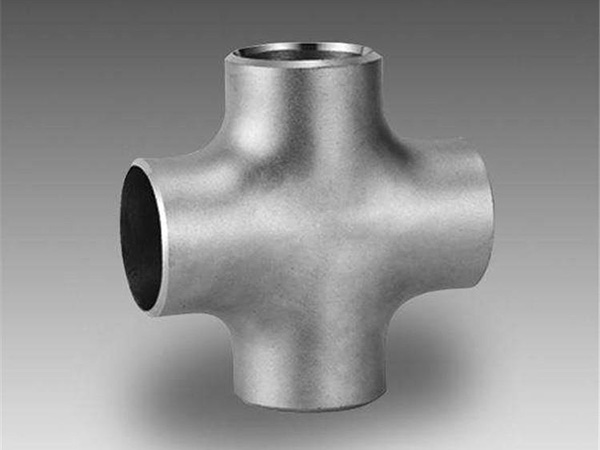
A four-way is one of the structurally complex connecting fittings in pipeline systems, with its main body in a cross shape. It has four interconnected interfaces, allowing the medium to split or merge in four directions, achieving bidirectional communication between two intersecting pipelines.
Its core function is to build cross nodes in pipeline networks, mainly used in the following two scenarios:
Diversion function: Simultaneously distribute the main medium to two mutually perpendicular branch pipes.
Confluence function: merging media from two vertical branch pipes into one main pipe.
Switching function: In some specific cases, it can be used to change the flow direction and achieve process switching.
The four-way network plays the role of a "crossroads" or "transportation hub" in the pipeline network, and is a key component in forming a complex circular pipeline network and distribution system.
2、 Main types and structural characteristics
The classification of four-way mainly depends on the size relationship and internal structure of its various interfaces.
1. Equal diameter four-way
The nominal diameter of all four interfaces is the same, and the standard model is usually represented as CR. It is suitable for situations where symmetrical diversion from the main pipe to two vertical directions is required, or where two vertical incoming flows are symmetrically merged into the main pipe. Its structure is symmetrical, the flow field is relatively complex, and the local resistance is relatively high.
2. Reducing four-way
At least one of the four interfaces has a diameter different from the others. The common type is that the diameter of both ends of the main pipe is the same, while the diameter of the two vertical branch pipes is the same but smaller than the main pipe. This is used to simultaneously introduce two smaller vertical branch pipes from a main pipe, or vice versa. The size combination needs to be customized according to the specific process.
3. Diagonal four-way joint
The axis of the branch pipe is at a non 90 ° angle (such as 45 °) to the axis of the main pipe. This method aims to reduce the impact and energy loss caused by sudden changes in fluid direction, making the flow field transition smooth. Suitable for conveying slurry, media that are prone to eddy currents, or systems with strict pressure drop requirements.
4. Y-shaped four-way splitter with lateral outlet
This is a unique combination of a Y-shaped tee and a straight pipe section, rather than a standard cross shape. Its fluid dynamics performance is superior to that of a standard four-way valve, and it is commonly used in situations where smooth flow separation is required and non vertical arrangement is allowed.
3、 Key processes and strength challenges
The difficulty and strength requirements of four-way fittings are higher than those of other fittings such as tees.
workmanship
Hydraulic bulging/hot pressing forming: This is the main method for seamless four-way joints. By using internal high-pressure liquid or external molds, the heated tube blank is simultaneously expanded in multiple directions to form a cross structure. This process product has good flow lines, but the mold is complex and the cost is high.
Casting: For large quantities, specific materials (such as cast iron, cast steel), or complex shaped tees, casting is an economical choice. Castings require strict heat treatment and machining to meet pressure and sealing requirements.
Welding Forming: Multiple pipe sections (one main pipe section and two branch pipe sections) are welded together through assembly, and a large amount of welding and reinforcement is carried out in the cross crossing area. This is the commonly used method for large caliber, non-standard four.
Core Strength Challenge - Reinforcement:
There are two perpendicular openings in the structure of a four-way connector, which weakens the strength of the main pipe much more than a three-way connector. The intersection area is a high stress concentration zone. Therefore, reinforcement is crucial and relatively complex. The following methods are usually used:
Overall increase in wall thickness: During molding, make the wall thickness in the intersection area much greater than other parts of the pipe body.
Welding reinforcement plate: Weld reinforcement plates that are the same as the base metal outside the intersection area.
Integral forging: For high-pressure small-diameter four-way joints, integral forging blanks are used to fundamentally protect strength.
4、 Materials and Connection Methods
Material: Like all fittings, its material needs to be compatible with the connecting pipeline system, including carbon steel, stainless steel, alloy steel, and special metals.
Connection method: The vast majority of four-way connections use butt welding to confirm the performance and sealing of the high-pressure system. In low-pressure, small-diameter, or maintenance situations, flange type tees or threaded tees may also be seen.
5、 Balancing fluid characteristics and applications
The flow field inside the four-way valve is very complex, and the fluid will undergo violent collisions, mixing, and directional changes at the intersection, resulting in a very high local drag coefficient, large pressure loss, and easy generation of eddies and scour. Therefore, there is an important principle in the process: unless necessary, the use of four-way connectors should be avoided, and a combination of two three-way connectors should be preferred instead.
6、 Core application industry
Despite its drawbacks, in specific scenarios, four-way communication:
Fire protection pipeline network: Form a circular water supply pipeline network to protect uninterrupted water supply in any direction.
Heating and air conditioning water system: Build the main intersection point of the same or different program system.
Industrial circulating water system: the intersection node of cooling water distribution and collection network.
Petrochemical industry: In specific processes that require bidirectional simultaneous distribution or collection of media (such as symmetrical feeding and discharging of reactors).
Long distance pipeline: used at the pig launcher/receiver station to achieve process switching (often using specialized pig turnouts).