








Large diameter flanges: NPS 26 to NPS 60 and ASME B16.47
Water mains, power plant circulating lines and large process headers all cross the size where ASME B16.5 stops and ASME B16.47 takes over. Flanges from NPS 26 through NPS 60 live under that standard, and they bring their own rules: two competing drilling series, heavy weights, and manufacturing challenges that small flanges never face. Anyone sourcing big flanges for the first time meets decisions that the ordinary flange buyer never sees. This article walks through them.
Series A and Series B: one size, two flanges
B16.47 defines two dimension series for the same pressure classes. Series A flanges are the heavier tradition: larger bolt circles, more and bigger bolts, thicker flanges. Series B flanges are lighter, with smaller bolt circles and fewer bolts, dimensioned to match European practice so equipment from different suppliers can bolt together. For a given class and size, both series hold the rated pressure, but they are not interchangeable. A Series A flange will not bolt to a Series B mating flange, because the drilling does not line up.
The choice usually belongs to the project specification, and it often follows the connected equipment. Large pumps, valves and waterworks fittings arrive drilled to one series or the other, and the flange order must follow. When a project mixes both traditions, the piping class list should state the series for every interface, because discovering a mismatch at installation on a 48 inch line is a memorable and expensive afternoon. A flange manufacturer can supply either series, but only if the order says which one governs.
How big flanges are made
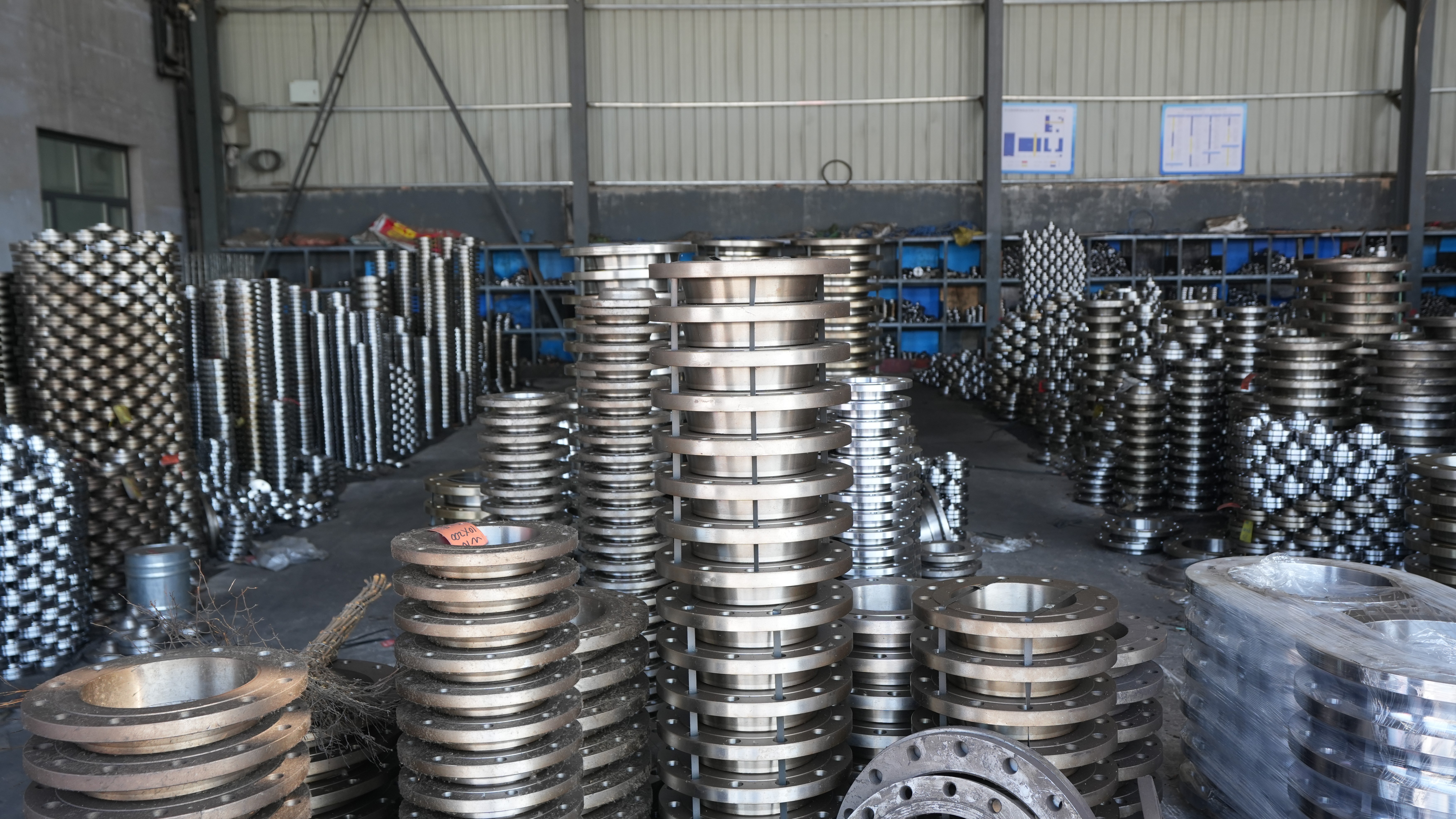
Weight drives manufacturing. A single 54 inch Class 150 blind flange can weigh more than a ton, so the forging route differs from the small flange line. Large flanges are produced as ring rolled forgings or as flame cut and machined disks, depending on class and thickness. Ring rolling aligns the grain circumferentially, which suits the hoop loading a flange carries, and machining brings the face, bore and drilling to the standard dimensions.
Quality checks scale with the piece. Ultrasonic examination finds laminations in the heavy sections, because a lamination inside a 200 mm thick blind flange is invisible to the eye and fatal in hydro test. Chemistry and mechanical tests follow the heat, as with any forging. Flatness matters more at this size too, since a face that is out of flat by a few millimeters across a meter diameter will concentrate gasket load in one zone and leak at the other. Factories machining large flanges on vertical lathes check flatness with straight edges and levels before the final facing cut.
Gaskets and bolt work on large joints
The sealing area of a large flange is enormous, and gasket practice adapts. Full face gaskets are standard on Class 150 water line joints, with the bolt holes punched through, while raised face joints on higher classes use sheet or spiral wound gaskets sized inside the bolt circle. Large joints move as they are bolted, so tightening follows a star pattern in stages, and the torque spec for a 1.5 inch stud is a serious number requiring proper tensioning equipment. Ask the flange supplier whether matched bolting and gaskets can be supplied together, since one source for the whole joint removes a coordination risk.
Handling is the other reality of big flanges. These pieces arrive by crane, and a face damaged in transit is not a stock replacement. Factories that ship large flanges regularly build wooden saddles, protect the machined faces with plywood or boards, and mark the lifting points. Buyers should confirm the packing plan before shipment rather than discovering that a chain sling crossed the gasket face.
Ordering large flanges without regrets
Put six things on the order: size, class, series, material grade, facing, and drilling standard if non ASME, such as MSS SP-44 for pipeline work. State the test requirements, ultrasonic for heavy sections, and the certificate class, EN 10204 3.1, in writing. Lead times for large flanges are measured in weeks, not days, because ring rolling slots and machining time are substantial, so early engagement with the manufacturer pays for itself.
Large diameter flanges are heavy, slow to make and unforgiving of small mistakes in series or drilling. They are also among the most straightforward purchases in piping, once the specification is written precisely. The flange factory quoted the steel, the buyer quoted the details, and a two ton blind flange bolts up exactly as drawn.
References
ASME B16.47, Large Diameter Steel Flanges NPS 26 Through NPS 60 Metric/Inch Standard, American Society of Mechanical Engineers, New York, 2017 edition.
MSS SP-44, Steel Pipeline Flanges and Flanged Fittings, Manufacturers Standardization Society of the Valve and Fittings Industry, Vienna, VA.
ASME B31.4, Pipeline Transportation Systems for Liquids and Slurries, American Society of Mechanical Engineers, New York.
Mohinder L. Nayyar, Piping Handbook, 7th edition, McGraw-Hill, New York, 2000.