








Flange Types and Selection: A Practical Guide for Pipeline Engineers
Flanges are the joints you can take apart. That simple fact explains why they show up at every pump, valve, vessel nozzle, and instrument connection in a plant. Choosing the right one is less about preference and more about matching the joint to the pressure, temperature, and fluid it will face. Get it wrong and you will either waste money on overkill or spend a weekend chasing a leak. This guide covers the common types and how to pick between them.
Why the flange choice matters
A flanged joint has to do two jobs at once. It has to hold the internal pressure without yielding, and it has to keep the gasket squeezed tightly enough to seal. Those two demands pull in different directions as temperature rises and bolts relax, so the type of flange you choose sets a limit on how well the joint can cope. A pipe flange supplier can only give you what the drawing asks for, so the decision starts with the engineer.
The main flange types
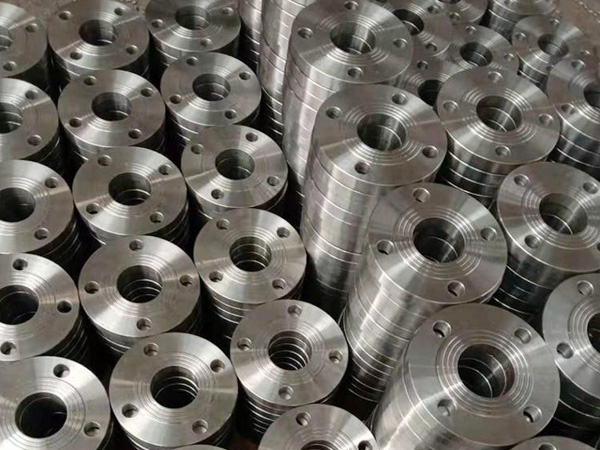
Weld neck flanges have a long tapered hub that blends into the pipe. The gradual transition spreads stress well, which is why they are the go-to choice for high pressure, high temperature, and cyclic service. They are also more expensive and take longer to fit because the bore has to match the pipe wall precisely.
Slip on flanges slide over the pipe and are welded on both the inside and outside. They are cheap, easy to align, and fine for lower pressure duties, but the two fillet welds carry the load and the fatigue performance is modest.
Socket weld flanges are for small bore lines, usually up to around two inches. The pipe sits in a recessed socket, and the fillet weld is quick to make, though a small gap at the base of the socket is often left to allow for thermal expansion.
Threaded flanges need no welding at all, which suits places where hot work is forbidden. They are common on small utility lines and are not the right choice for severe cyclic or high pressure service. Lap joint and blind flanges round out the common set. The blind flange is simply a solid disc that seals a line or nozzle off, and it is the one you will see most often during maintenance and pressure testing.
Face types and gaskets
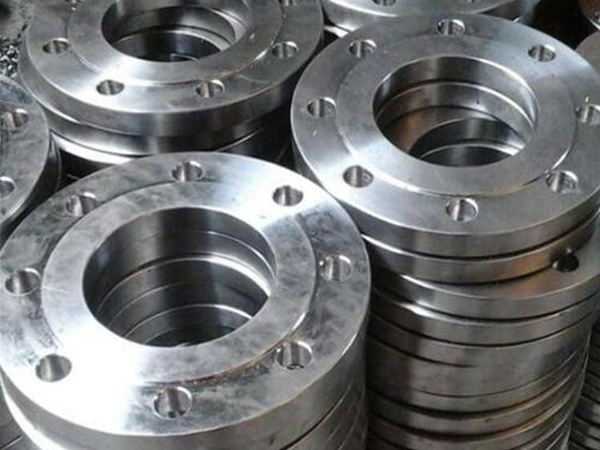
The flange face is where the sealing actually happens, so it deserves as much attention as the body. A raised face is the default in most plants and works with standard sheet gaskets. A flat face is used with cast iron or where bolting stress must stay low. Ring type joints use a metal ring that bites into a groove, which is the answer for very high pressure service. Tongue and groove and male and female faces are less common today but still appear in older drawings.
Matching flange to pipe and pressure class
Flanges are grouped into pressure classes, and each class carries a temperature derating curve. The same class that is comfortable at ambient may be marginal at high temperature. Always check the rating at the actual design temperature rather than assuming the class number tells the whole story. The bore of the flange also has to match the pipe schedule; a mismatch creates a step that traps fluid and disrupts flow.
Material choice
Carbon steel covers most general service. Stainless steel is chosen for corrosive media or where cleanliness matters, such as food and pharmaceutical lines. Alloy steel handles high temperature and hydrogen service. Whatever the material, the flange should be compatible with both the pipe and the wetted fluid, and it should meet a recognized forging or casting specification so the mechanical properties are known.
Common mistakes to avoid
Bolting a raised face flange directly to a flat face one is a frequent error, because the faces do not seat properly. Reusing gaskets is another. Mixing bolts of different grades on one joint, or leaving old bolts in a hot line, both invite trouble. And it is easy to forget that the flange and its bolts expand at different rates, which is why high temperature joints need careful bolt up and, in some cases, spring washers or live loading.
Sourcing notes
When you buy, ask for material certificates, dimensional inspection records, and the marking standard the flange is stamped to. A serious flange manufacturer will welcome those questions. Price matters, but a joint that leaks costs far more than the few dollars saved on the fitting, especially once the line is insulated and back in service.
References
ASME B16.5, Pipe Flanges and Flanged Fittings: NPS 1/2 through NPS 24 Metric/Inch Standard.
ASME B16.47, Large Diameter Steel Flanges: NPS 26 through NPS 60.
ASTM A105/A105M, Standard Specification for Carbon Steel Forgings for Piping Applications.
ASME B31.3, Process Piping, American Society of Mechanical Engineers.
Nayyar, M. L., Piping Handbook, 7th edition.