








Butt Welding Elbow Fittings: Types, Manufacturing, and How to Source Them
Anyone who has walked a process plant knows the look of a butt welding elbow: that smooth, curved section where a pipe changes direction without a threaded joint or a flange in sight. It is one of the most common pipe fittings in the world, and also one of the most misunderstood when it comes time to buy. This guide walks through what these elbows are, how they are made, and what a buyer should verify before signing off on a shipment from a pipe fitting factory.
What a butt welding elbow actually does
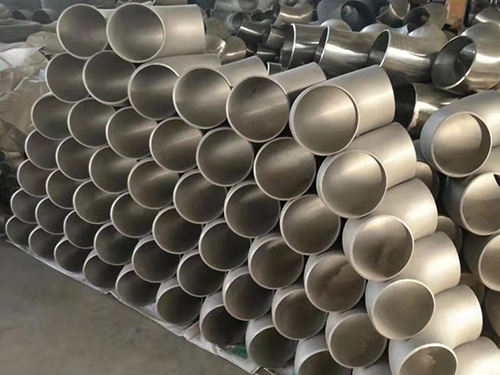
A butt welding elbow, often shortened to butt weld elbow, is a fitting with beveled ends that gets joined to pipe by full penetration butt welding. Because there is no thread and no gasket, the joint ends up about as strong and leak-tight as the pipe itself. That matters in systems carrying steam, hydrocarbons, slurries, or anything else that would make a threaded connection a bad idea.
The fitting has one job: change the direction of flow. Doing it with a smooth radius rather than a sharp miter keeps pressure drop low and reduces the turbulence that wears out pipe walls over years of service.
Long radius vs short radius
You will see two basic geometries on the shelf. A long radius (LR) elbow has a centerline radius of 1.5 times the nominal pipe diameter. A short radius (SR) elbow is tighter, at 1.0 times the diameter. LR elbows are the default in most piping because they create less pressure loss and are gentler on flow. SR elbows show up where space is tight, say inside a skid or next to an equipment tie-in, and the trade-off is higher pressure drop and more turbulence.
If a drawing calls out a 90 degree LR elbow, do not substitute a short radius just to save a few centimeters. The hydraulics and the stress analysis were probably built around the radius shown.
45, 90, and 180 degree elbows
Ninety degree elbows are the workhorse of the family. Forty-five degree elbows let a line make a gentler turn and are often used in pairs to create an offset. A 180 degree elbow, sometimes called a return bend, sends flow back in the opposite direction and is common in heat exchanger and furnace piping.
Standard sizes run from about a half inch up to very large diameters, and the degree, radius, and end preparation all have to match the specification. A pipe elbow manufacturer will normally stock the common combinations and roll or press the rest to order.
How these elbows are made
There are a few production routes, and the method affects both cost and quality. Mandrel forming pushes a heated tube over a shaped mandrel, which gives good dimensional control and a fairly uniform wall. Hot forming and cold forming are used depending on size and material. Very large elbows are sometimes made by welding together segments, which is acceptable when the welds are done and inspected properly, though it does add joints that must be tested.
A good factory will track heat numbers from raw material through forming and heat treatment, so any finished fitting can be traced back to its steel. If a supplier cannot explain where a fitting's material came from, treat that as a warning sign rather than a paperwork annoyance.
Materials and standards to ask about
Carbon steel, alloy steel, and stainless steel are the usual choices. Carbon steel fittings for moderate and high temperature service typically follow a recognized specification, and the same is true for the stainless grades. Wall thickness is usually described by schedule, such as Sch 40 or Sch 80, or by a specific nominal thickness.
Ask which standard the fittings are made to, and ask for the mill certificates. Reputable manufacturers in the pipe fitting supply chain issue test reports as a matter of routine, not as a favor you have to negotiate for.
What to check before you place an order
Confirm the angle, radius, size, schedule, material, and end finish. Check that the bevel angle suits your welding procedure. Ask about hardness and impact testing if the line runs cold or carries sour service, since those requirements often decide whether a fitting is even allowed on the job. And look at packaging, because beveled ends need protection or they arrive nicked and out of tolerance.
Finally, treat the supplier like a partner rather than a vending machine. A factory that answers technical questions clearly, sends photos of the actual production run, and stands behind its documentation will save you far more grief than the one quoting the lowest price per piece. Supply reliability, not just unit cost, is what keeps a project on schedule.
References
ASME B16.9, Factory-Made Wrought Buttwelding Fittings, American Society of Mechanical Engineers.
ASTM A234/A234M, Standard Specification for Piping Fittings of Wrought Carbon Steel and Alloy Steel for Moderate and High Temperature Service.
ASME B31.3, Process Piping, American Society of Mechanical Engineers.
EN 10253-2, Butt-welding pipe fittings, European Committee for Standardization.
Nayyar, M. L., Piping Handbook, 7th edition.