








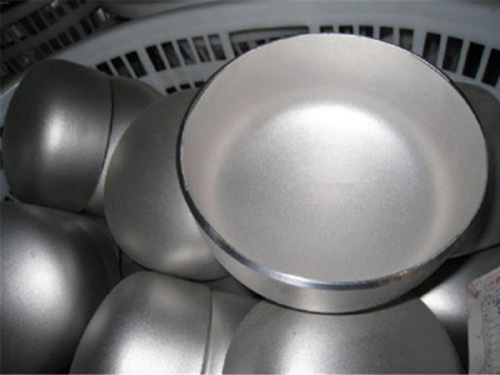
1、 Core Definition and Product Positioning
Carbon steel pipe cap is a standard fitting mainly made of carbon steel, used to seal the end of pipelines or pressure vessel ports. As a fundamental and common sealing component in industrial pipeline systems, its core function is to provide pressure boundaries to prevent medium leakage or debris from entering.
This type of product follows good reputation and domestic common standards, with practicality, economy, and efficiency as its core characteristics. It is a commonly used cap type in traditional industrial industries such as petroleum, chemical, power, and construction. Its performance is sufficient to meet the needs of most non extreme working conditions and has high cost-effectiveness.
2、 Core Material System
The "carbon steel" of carbon steel pipe caps is a broad classification, and different grades are selected according to usage requirements in actual production:
1. Ordinary carbon structural steel
Represented by Q235B. Has plasticity and weldability, but average strength and heat resistance. Mainly used for pipeline ends or tank heads of non corrosive and non toxic media such as water, air, steam, oil, etc. at normal pressure or low pressure and room temperature. It is the main choice for civil industries such as building water supply and drainage, HVAC, etc.
2. Carbon structural steel
Compare the application of 20 # steel. Its strength, plasticity, and toughness are well matched, and its comprehensive mechanical properties are good, which can withstand moderate pressure. 20 steel that has undergone heat treatment can be used safely within a determined temperature range (approximately -20 ℃ to 450 ℃). It is a standard material for general pressure vessels, medium and low pressure chemical pipelines, and power plant auxiliary systems.
3. Steel for boilers and pressure vessels
Q245R is a typical representative. This type of steel has strict control over its chemical composition, mechanical properties, and process performance (especially impact toughness), and the content of harmful elements such as sulfur and phosphorus is relatively low. One on one pressure vessel shell and its head (pipe cap) have high safety.
These materials form the basis for the large-scale application of carbon steel pipe caps due to their affordable prices, mature sources, processing, and welding techniques.
3、 Main types and structural forms
The form of carbon steel pipe cap is determined by its usage pressure and connection method:
Oval/butterfly shaped pipe cap: This is the standard form for pressure applications. The elliptical head is subjected to stress and has a wide range of applications, following standards such as GB/T 25198. The butterfly shaped head has a shallow scale and is easy to punch, making it commonly used for medium and low pressure vessels. Both have straight edge segments, which facilitate butt welding with the cylinder and avoid high stress areas.
Flat cover/flange cover: With a simple structure, it is a circular flat plate. It mainly relies on the bending resistance generated by its own thickness to bear pressure, so the pressure bearing efficiency is low, and the required thickness under the same conditions is much greater than that of a convex head. Commonly used for manhole covers, handhole covers, inspection ports in low-pressure and atmospheric pressure systems, or in situations where flange bolts are used for frequent opening.
Threaded pipe cap: The inner side of the pipe cap is machined with pipe threads, which can be directly screwed onto threaded pipes. Used for low-pressure, small-diameter and frequently disassembled pipe end seals, such as instrument pressure pipes, sampling pipes, etc.
4、 Key processes and characteristics
The plasticity and processability of carbon steel make its pipe cap process mature and cost controllable:
The mainstream forming process mainly adopts stamping forming. For thin-walled or small-diameter materials, cold stamping is commonly used; For thick walls or large diameters, hot stamping is used. Spinning molding is also commonly used for specific specifications. Mold based production ensures the consistency of product dimensions and the ability to supply in bulk.
Excellent welding performance: Carbon steel (especially low carbon steel) is one of the categories with good weldability among all metal materials. It can be welded using almost all conventional welding methods (manual arc welding, submerged arc automatic welding, gas shielded welding, etc.), and has relatively relaxed requirements for welding material matching and process, greatly reducing the difficulty and cost of on-site installation.
Standardized heat treatment: For products with significant cold forming deformation or specific grades of materials, stress relief annealing will be performed to release processing stress and prevent deformation or stress corrosion during use.
Processing is optional: Depending on the usage environment, the carbon steel pipe cap can undergo surface treatment such as painting (anti rust paint), galvanizing (hot dip or electroplating) after leaving the factory to improve its ability in humid atmospheric environments (based on actual reports). For internal corrosive media, there may sometimes be an inner lining layer.
5、 Core application industry
Carbon steel pipe caps penetrate into various basic industries of industry due to their economy:
Petrochemical industry: End sealing of medium and low pressure storage tanks (such as raw material oil tanks and water tanks), process auxiliary pipelines, and heat exchanger shell heads.
Electric power industry: deaerator, low-pressure heater, drain flash tank, compressed air storage tank for plant use.
Urban public utilities: water dividers, collectors, and stabilizing tanks for centralized heating pipelines; The clean water tank and filter tank of the water plant.
Architecture and HVAC: Intermediate air conditioning water system terminals, fire suppression (based on actual reports) boxes, and boiler room air distribution cylinders in high-rise buildings.
General mechanical equipment: hydraulic station oil tank, air compressor aftercooler, drying tower.
6、 Selection and Precautions
When selecting carbon steel pipe caps, the following points should be considered:
Clear operating parameters: pressure, temperature, and medium properties need to be verified. Carbon steel is not suitable for strongly corrosive media (such as hydrochloric acid, dilute sulfuric acid) or low temperature (impact toughness needs to be considered below -20 ℃) environments.
Standards and specifications: Priority should be given to selecting products that comply with industry standards such as GB/T 25198 (pressure vessel heads), GB/T 12459 (steel butt welded pipe fittings), or HG/T, and quality confirmation should be based on evidence.
Correct connection method: butt welding connection is used for main pressure pipelines; Flange connection is used for maintenance areas; Threaded connections are only used for unimportant small pipes. Confirm that the end form of the pipe cap (groove, thread) matches the pipeline.
Wall thickness is the key to Enron: the thickness of the pipe cap needs to be calculated using standard formulas or determined by consulting standard data tables, and cannot be estimated based on experience. Especially for flat covers, their thickness needs to be strictly calculated.