








1、 Core Definition and Function
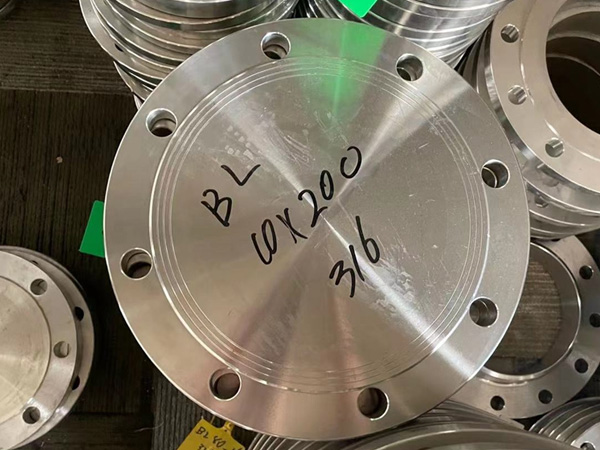
Blind plate, commonly known as the "pipe switch" or "safe goalkeeper", is a solid flange shaped circular or square metal plate with no holes in the center. It is a simple and high-quality pipeline isolation device.
Its core function is to achieve appropriate and physical isolation of pipeline or equipment interfaces. By installing blind plates at the flange connection, the flow of the medium inside the pipeline can be thoroughly blocked, forming a tight and airtight barrier to confirm the products in the downstream work area.
A vivid metaphor: Blind plates are to pipes what "plugs" are to bottles, but their strength and sealing requirements are much higher than those of everyday plugs.
2、 Main types and characteristics
According to usage scenarios, structures, and operating frequencies, blind flanges are mainly divided into the following categories:
1. Flat blind plate
This is a common and basic form. It is a solid thick plate that matches the size of the mating flange sealing surface. Isolation is achieved by disassembling the bolts at the flange connection, inserting them between the flange pairs, and then re tightening the bolts. It has a simple structure, low cost, and appropriate sealing. But each installation or disassembly requires a complete shutdown, pressure relief, and bolt disassembly, which is cumbersome and time-consuming. It is suitable for situations that require long-term, long-term isolation or serve as a backup isolation point.
2. Eight character blind plate
This is a clever 'combination' blind plate. It is composed of a solid blind plate and an opening ring (through plate) of the same diameter as the pipeline connected by a common operating handle, shaped like the Chinese character "eight". It is installed for a long time between two mating flanges.
Open state: Rotate the operating handle to the position where the "through plate" is located between the flanges, and the medium can pass through normally.
Off state: Rotate the operating handle 180 degrees to insert the blind plate between the flanges and completely cut off the medium.
Its major advantage is that it can switch states at a suitable speed without disassembling bolts, achieving speed adaptation and visualization of isolation operations, greatly improving operational safety and efficiency. Applied to processes that require frequent switching or emergency isolation.
3. Plug in board
Usually refers to blind flange devices used for large-diameter pipelines, often used in conjunction with one-on-one guide rails and locking mechanisms. It is like a "gate" that inserts or extracts heavy solid steel plates into or out of one-on-one slots on pipelines through hydraulic, electric, or manual mechanisms. Commonly used in the import and export of storage tanks, main pipelines of urban gas pipelines, etc., as the main isolation method during maintenance.
4. Pad ring blind plate
This is a special technique where raised "ear handles" or "bosses" are machined around the edge of the flat blind plate based on the position of the bolt holes. These protrusions are inserted into the flange bolt holes to confirm that the blind plate is carefully aligned during installation, preventing poor sealing or installation difficulties caused by misalignment.
3、 Key and selection elements
Although the structure of blind plates is simple, their selection needs to be rigorous, and the following points are crucial:
Compatibility: The outer diameter, bolt hole center distance, thickness, and sealing surface form of the blind plate need to be matched with the matching flange at the isolated location. The sealing surface is usually raised or fully flat.
Thickness calculation: The thickness of the blind plate is not arbitrarily determined, and it needs to be strictly calculated based on the pressure, temperature, pipe diameter, and allowable stress of the isolation medium to confirm that it will not undergo plastic deformation or fracture when subjected to medium pressure. Usually follow the calculation formulas in standards such as ASME or GB.
Material selection: The blind plate material needs to be compatible with the pipeline system material and consider the corrosiveness of the medium. Common materials include carbon steel, stainless steel, alloy steel, and special working conditions may use materials such as Monel and titanium.
Identification and listing: This is the key to Enron's management. The installed blind plate needs to be equipped with a prominent identification plate, indicating the number, installation location, installer and date, pressure level, and other information, and recorded on file. This is the lifeline to prevent accidents caused by misoperation (such as driving without removing the blind flange).
4、 Core application scenarios and importance
The application of blind plates runs through all aspects of industrial production and is the cornerstone of Anran operations:
Equipment maintenance and repair: Before conducting internal maintenance on reactors, towers, heat exchangers, and other equipment, blind flanges need to be installed at the flanges of all connected pipelines to confirm that toxic, useless, flammable, and explosive media cannot enter the maintenance space appropriately, and to protect personnel safety.
System isolation and purging: Before or after the device is started or stopped, blind plates are needed to isolate different process systems or utility systems for purging, replacement, airtightness testing, and other operations.
Backup pipeline sealing: For backup pipelines and couplings that are temporarily not in use, blind plates should be installed at their ends to prevent the entry of materials or impurities by mistake.
Process flow switching: By operating the eight character blind plate, the process flow can be switched smoothly and at an appropriate speed, such as changing materials from one route to another.
Summary: Blind plate is one of the components with low cost but high safety protection value in industrial equipment. It represents the original and high-quality concept of "physical isolation" advocated by Enron. Correct and standardized installation and strict management of blind flanges are key links in preventing major safety accidents such as fires, explosions, and poisoning. In the industrial safety regulations, the installation, removal, and management of blind plates have always been the core inspection items in the safety work permit system.