








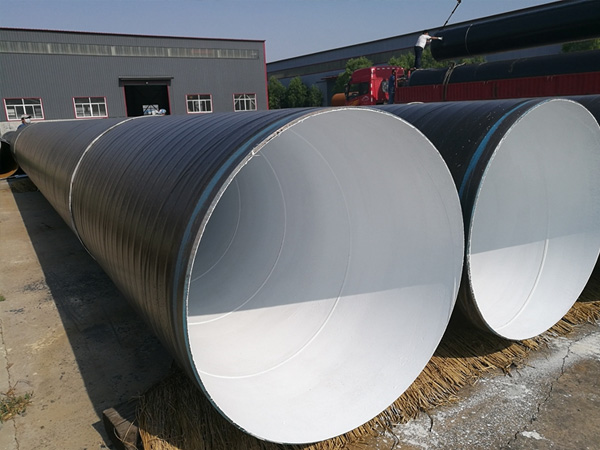
IPN8710 drinking water steel pipe is a one-to-one pipe designed for water transportation scenarios such as domestic drinking water, grade water supply, and municipal tap water pipelines. It is made of seamless steel pipes, spiral steel pipes, and straight seam steel pipes as base materials, and coated with IPN8710 interpenetrating network coating on the inner and outer surfaces. The coating has been specially formulated in multiple regions and is free of heavy metals and toxic volatiles, meeting the hygiene and safety standards for drinking water. It has both performance and hygiene safety, and is the mainstream choice for water pipelines.
The core protective layer of the pipe is IPN8710 interpenetrating network coating, which forms a dense interpenetrating network structure through the interpenetration and cross-linking of resin molecules. The coating combines the strong adhesion, chemical corrosion resistance, and weather resistance of epoxy resin with those of acrylic resin. After film formation, the surface is smooth and dense, without pinholes or bubbles, effectively blocking the contact between corrosive media in water and soil and the steel pipe substrate. At the same time, the smooth inner wall of the coating can reduce water flow resistance, reduce pipe head loss, and improve water delivery efficiency.
The IPN8710 drinking water steel pipe can be flexibly coated with internal, external, or dual internal and external coatings according to the needs of the usage scenario, suitable for different installation environments such as buried, overhead, and exposed installation. The inner layer is designed to prevent slight corrosion of the water body, prevent rusting and scaling of the inner wall of the steel pipe, avoid rust and impurities from polluting the water quality, and protect the cleanliness of drinking water; The outer layer is resistant to the acidity, alkalinity, microorganisms, groundwater in the soil when buried, as well as the corrosion caused by the atmosphere, sun and rain when overhead, extending the service life of the pipeline in all directions; Municipal buried tap water pipelines often adopt a dual internal and external solution, balancing water quality safety and pipeline weather resistance.
Its production process strictly follows the dual standards of drinking water hygiene and construction. The core processes include surface pretreatment of steel pipes, coating formulation, application, curing, testing, etc. Among them, the surface of steel pipes needs to be treated with rust removal, oil removal, and descaling to achieve the required cleanliness and roughness for painting, and to confirm that the coating is closely integrated with the steel pipe; The coating adopts high-pressure airless spraying, rolling coating and other processes to protect the uniform thickness of the coating. The conventional thickness of the inner coating is 0.3~0.8mm, and the outer coating can be adjusted to 0.5~1.2mm according to the soil corrosion level. After coating, it is often cured at high or low temperatures to avoid high temperature treatment affecting the hygiene performance of the coating.
In terms of performance, IPN8710 drinking water steel pipes have multiple advantages: firstly, they meet hygiene standards, with coatings that comply with GB/T 17219 "Safety Evaluation Standards for Drinking Water Transmission and Distribution Equipment and Protective Materials", and can detect substances that have been in contact with drinking water for a long time, without changing the color, taste, and turbidity of the water body, meeting the requirements of grade water supply; Secondly, it has excellent performance, such as water immersion resistance, resistance to weak acids and alkalis, and resistance to microbial corrosion, which solves the problem of rusting and scaling in ordinary steel pipes for water transmission and avoids secondary pollution of the pipeline network; Thirdly, it has stable mechanical properties, strong coating adhesion, impact resistance, and wear resistance. It can adapt to slight collisions during pipeline transportation, construction, and installation processes, and the coating is not easily cracked or peeled off after curing; The fourth advantage is convenient construction and maintenance. The coating solidifies at room temperature without the need for complex high-temperature equipment. After pipeline connection, the same series of IPN8710 coating can be used for weld joint repair. The repair process is simple, with good adhesion to the original coating and no weak points.
The application scenarios of this pipe cover the entire industry chain of domestic drinking water, including buried and overhead laying of municipal tap water pipelines, secondary water supply pipelines in residential areas, raw water and clean water transmission pipelines in water plants, rural Anran drinking water project pipelines, food processing plants, drinking water plants and other water related transmission pipelines. It can also be used for low-pressure water transmission scenarios such as rainwater and production water that require basic requirements. It is the choice of pipe for municipal engineering and livelihood water supply projects.
The production and acceptance of the product follow current standards. In addition to complying with the relevant standards for drinking water hygiene and safety, strict testing is conducted on the thickness, adhesion, water resistance, and hygiene performance of the coating in accordance with GB/T 51241 "Construction and Acceptance Standards for Water Supply and Drainage Pipeline Engineering" and HG/T 20679 "Construction and Acceptance Specification for Chemical Building Engineering". Each batch of products is accompanied by a hygiene testing report and a performance testing report to confirm the safety and performance after being put into use.