








1、 Core Definition and Product Evolution
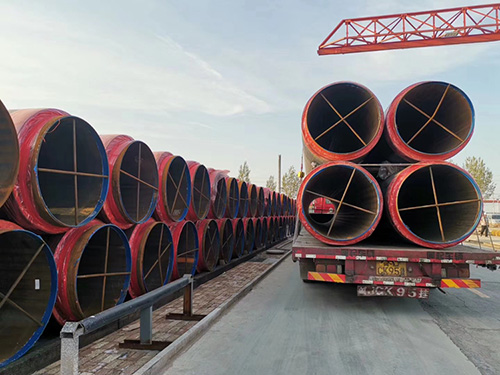
Polyurethane foam insulated steel pipe, commonly known as "pipe in pipe", is the core basic product of modern prefabricated buried insulated pipelines. It adopts the factory production process. In the annular cavity between the transmission steel pipe (work pipe) and the external protective pipe, polyurethane rigid foam plastic foaming material is injected on the site, and after chemical reaction and curing, a continuous, effective overall thermal insulation structure is formed.
This product marks a revolutionary leap in pipeline insulation technology from "on-site wrapping" to "factory prefabrication", and has become the industry standard solution for urban centralized heating, regional cooling, and temperature medium transportation industries.
2、 Analysis of the "Trinity" Structure
Its effectiveness comes from the intricate layered composite structure:
1. Work tube (core tube)
Material: Choose seamless carbon steel pipe (GB/T 8163, for conveying hot water and hot oil), spiral seam submerged arc welded steel pipe (SY/T 5037, for large-diameter main lines) or stainless steel pipe (for corrosive media/clean systems) according to the conveying medium.
Core requirements: pressure resistance, temperature resistance, (based on actual reports). The surface needs to undergo shot blasting and rust removal treatment to achieve a cleanliness level of Sa2.5, and confirm that it is firmly bonded to the insulation layer.
2. Insulation layer (core functional layer)
Material: rigid polyurethane foam.
Key Performance:
Relatively low thermal conductivity: λ ≤ 0.033 W/(m · K) 50 ℃, insulation efficiency is 3-5 times that of traditional materials.
High closed cell rate: ≥ 90%, relatively low water absorption rate (≤ 3%), kept dry for a long time.
Comparison: compressive strength ≥ 0.3 MPa, resistant to soil pressure.
Self adhesiveness: forms a solid whole with the steel pipe and outer protective pipe.
Process: High pressure integral casting molding. After careful proportioning and mixing, black and white materials are injected into the annular space through one-on-one injection holes at a suitable speed to foam and fill each gap.
3. Outer protective tube (protective layer)
Mainstream material: Compared to polyethylene, usually black, with added antioxidants and UV absorbers.
Core role:
(Based on actual reports) (Based on actual reports): The permeability is relatively low, and it is confirmed that the insulation layer is dry.
Mechanical protection: resist stress and corrosion during transportation, installation, and in soil.
Weather resistance: resistant to common chemical substances in soil erosion.
Performance indicators: elongation at break ≥ 350%, resistance to environmental stress cracking (F50) ≥ 200h.
3、 Main product types and technological variants
1. Classify according to the material of the outer protective tube
Polyethylene outer protection type: commonly used, suitable for the vast majority of buried hot water pipe networks (≤ 120 ℃).
Fiberglass outer protection type: with good temperature resistance, used in special corrosive environments or situations requiring high ring stiffness.
Steel outer protection type: refers to the inner layer of the "steel sleeve steel" structure, used for prefabrication of high-temperature steam pipelines.
2. Classified by molding process
One step method: After surface treatment, the working tube is directly inserted into the outer protective tube, and then foam is continuously poured while moving. Good efficiency, even insulation layer.
Two step method: First, make the outer protective tube, then insert the working tube, and then fix both ends for pouring. Mature technology and clear quality control points.
3. Special functional type
Leakage alarm type: Two parallel conductive wires are pre embedded in the insulation layer to form an alarm circuit. Once moisture enters due to leakage of the work tube or damage to the casing, causing a short circuit in the circuit, remote alarm will be triggered, and the fault point will be carefully located.
Vacuum pumping type: pumping to a low vacuum state in the annular space of the insulation layer, greatly reducing convective heat transfer, used for special projects with ultra-low heat loss requirements.
4、 Indicators and Quality Control
1. Gold standard for insulation performance
At 50 ℃, the thermal conductivity remains stable for a long time with a value of ≤ 0.033 W/(m · K).
The radial density distribution gradient of foam is ≤ 10%, and the overall performance is confirmed to be uniform.
After continuous operation at 130 ℃ for 30 days, the insulation layer showed no cracking or powdering.
2. Long term key
Closed cell rate: detected by scanning electron microscopy, it needs to be ≥ 90%, which is the lifeline of resistance to water vapor penetration.
Soil stress resistance: The stiffness of the polyethylene outer protective pipe ring is selected according to the burial depth (usually S2 grade ≥ 8 kN/m ²).
End face sealing: Both ends of the finished pipe need to be temporarily sealed with one-to-one polyethylene end caps or hot melt seals to prevent moisture from entering during storage.
3. Production process control
The ratio accuracy of white material (polyether polyol) and black material (isocyanate) is controlled within ± 0.5%.
The foaming environment temperature is strictly controlled at 20 ± 5 ℃.
The injection pressure is stabilized at 10-15MPa, and the foam filling degree is confirmed.
5、 Full lifecycle application process
1. Selection
Calculate based on medium temperature, system pressure, soil corrosiveness level, burial depth, and expected lifespan.
Select the corresponding working pipe wall thickness series (such as Sch40, Sch80), external protection pipe wall thickness and foam insulation layer thickness.
2. Revolution in Installation and Construction
Groove requirements: The bottom should be flat, and a sand layer should be laid to avoid sharp stones damaging the outer protective layer.
Pipeline connection:
Work management: using argon arc welding as the base and manual welding for filling, with 90% non-destructive testing.
Outer protective tube: It is connected and sealed on site using an electric heating sleeve or heat shrinkable tape, and the actual tightness is mainly tested.
Backfilling specification: First backfill fine sand to 300mm above the top of the pipe, and then compact the original soil layer by layer.
3. Intelligent operation and maintenance
For the alarm line system, regularly perform loop resistance testing.
Conduct periodic inspections using infrared thermal imagers to identify potential leakage points through abnormal surface temperatures.
6、 Core application industry
Urban centralized heating: The main and branch pipelines of primary and secondary networks are currently the major application market.
Regional energy and cooling: Regional cooling pipeline network, combined cooling, heating, and power system.
Petrochemical industry: Underground transportation pipelines for chemical media at room temperature and medium temperature (≤ 120 ℃).
Intermediate air conditioning: outdoor pipe network for chilled water and cooling water in the building complex.
Centralized supply of domestic hot water: hot water systems in hotels, hospitals, campuses, etc.