








1、 Core Definition and Product Positioning
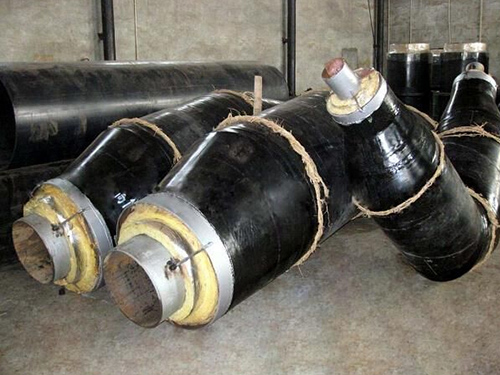
Steel sleeve insulated reducing pipe is a key one-to-one variable diameter component in high-temperature steam prefabricated buried insulation pipeline systems. It is a highly integrated functional module, meticulously prefabricated in the factory from working reducers (big and small heads), high-temperature insulation layers, sliding/fixed support systems, and external steel protective sleeves.
Its core function is to achieve smooth pressure transition at the connection points (reducing points) of pipes with different diameters in the high-temperature and high-pressure steam transmission pipeline network, insulation effect, (mainly based on actual reports), and withstand huge thermal displacement and soil loads. It is specifically designed to address extreme challenges such as high temperature thermal expansion, high pressure impact, and harsh underground environments that traditional insulation cannot solve.
2、 Core structure analysis
This product is a multi-layered composite detailed engineering structure, with the following layers from inside to outside:
1. Work tube (core tube)
The body of carbon steel or alloy steel reducer used for transporting high-temperature steam. Usually, butt welded seamless reducers are used, with standard grooves machined at both ends, and the pressure needs to match the high operating pressure of the steam pipe network.
2. Insulation layer system
This is the core of the technology, usually using a "composite insulation" or "multi-layer insulation" structure:
Inner layer: (based on actual reports) inorganic insulation layer (such as microporous calcium silicate, glass wool, aluminum silicate fiber blanket). Directly wrapping the work tube can withstand high temperatures of 350 ℃ -600 ℃ for a long time, preventing material carbonization failure (based on actual reports).
Outer layer: effect (based on actual report) thermal insulation layer (such as rigid polyurethane foam). The main function is to further reduce heat loss and achieve the overall insulation effect. Its working temperature is protected by an inorganic layer on the inside.
3. Sliding/fixed support system
This is the essence of the "steel sleeve steel" structure. There are guide brackets and sliding brackets set between the work pipe and the outer steel pipe.
Confirm that the work pipe can move freely along the axis during thermal expansion or cooling contraction, avoiding the generation of significant thermal stress that can damage the pipeline or insulation structure.
The bracket is usually made of composite materials with low friction coefficient (such as polytetrafluoroethylene) (based on actual reports).
4. Outer protective steel pipe
That is, the outer steel protective sleeve. Its core function is:
Appropriate (based on actual reports) barriers: Confirm that groundwater and moisture cannot come into contact with the insulation layer and work pipes.
High mechanical strength: It is the "load-bearing skeleton" of the structure that can withstand the enormous pressure of backfill soil during direct burial, ground dynamic loads (vehicles), and complex stresses generated by internal thermal displacement of pipelines.
Treatment: The outer surface is usually coated with heavy coatings such as epoxy coal tar, polyurea, or 3PE to confirm decades of underground life.
3、 Main types and structural characteristics
According to the internal thermal displacement treatment method, it can be mainly divided into two categories:
1. Internal sliding type
Structural features: The insulation layer is directly composite on the working pipe and slides inside the outer protective steel pipe along with the working pipe.
Advantages: The structure is relatively simple and the cost is low.
Disadvantages: Friction between the insulation layer and the inner wall of the outer protective steel pipe may cause wear and tear of the insulation material during long-term operation; Suitable for pipelines with small or medium diameter thermal displacement.
2. External sliding type (mainstream)
Structural features: The working pipe is independently supported at the center of the outer protective steel pipe through a bracket, and only the working pipe slides during operation. The insulation layer is fixed on the inner wall of the outer protective steel pipe.
Advantages: The insulation layer is wear-resistant, with smooth thermal displacement, suitable for large-diameter, long-distance, high-temperature and high-pressure mainline pipelines, and has high performance.
Technical manifestation: The reducer part is particularly complex, requiring synchronous processing of different thermal displacements and support arrangements caused by different pipe diameters on both sides.
4、 Key technical points and challenges
The insulation effect under high temperature gradient: The core lies in the selection and matching of composite insulation materials, confirming that each layer of material works within its safe temperature range from the working pipe temperature above 350 ℃ to the outer steel pipe close to the soil temperature, and the overall thermal resistance meets the requirements.
Thermal displacement analysis and structure: Pipes with different diameters connected at both ends of the reducer have different thermal expansion and thrust. Accurate thermal calculations are required, and customized support types (fixed/guided/sliding), positions, and spacing are needed to confirm stress controllability and smooth displacement, which is a major challenge.
(Based on actual reports) and appropriateness of tidal discharge:
Sealing: The circumferential seams at both ends of the reducer are the lifeline (based on actual reports), usually sealed by welding.
Moisture removal: A moisture removal pipe should be installed on the outer protective steel pipe, with one end penetrating into the insulation layer and the other end leading out to the ground. It can not only monitor the sealing condition of the insulation layer in real time, but also discharge trace amounts of moisture or gases from the decomposition of insulation materials.
Precision suitable for factory prefabrication: All components need to be assembled, welded, and inspected in an environmentally controlled factory. On site, only the butt welding of the work pipes and the sealing of the outer protective pipes are carried out, which is a practical, innovative and feasible way to protect quality.
5、 Core application industry
This is a component designed for extreme working conditions:
Urban high-temperature steam centralized heating: at the changing diameter of the main export line of the thermal power plant, and at the distribution nodes leading to different industrial users or regions.
Industrial park: Process pipelines that require high-pressure steam for chemical, pharmaceutical, textile, and other industries.
Petroleum extraction and refining: heavy oil thermal recovery steam injection pipeline, refinery steam power pipeline network.
Long distance steam pipeline: a steam transmission mainline spanning several kilometers, used to connect pipe sections of different pressures.
6、 Key points for selection, installation, and monitoring
Careful selection: Required parameters include steam pressure/temperature, pipe diameter variation, burial depth, soil characteristics, and expected lifespan. Customized production is carried out by the manufacturer after thermal and stress calculations.
Strictly control installation:
Welding of work pipes: argon arc welding as the base layer and other required processes must be used, and 90% non-destructive testing must be conducted.
External protective tube joint repair: This is a critical process on site, which requires the use of sealing techniques equivalent to or different from prefabricated sections (such as welding sealed covers+foaming), and specific sealing tests based on actual conditions.
Fixed pier setting: In the complex stress area near the reducer, reinforced concrete fixed piers are usually poured to balance the unbalanced thrust of the pipeline.
Operation monitoring: It is necessary to use pre embedded tidal pipes and temperature monitoring lines to regularly check the drying status and temperature field of the pipeline insulation layer, in order to achieve predictive maintenance.