








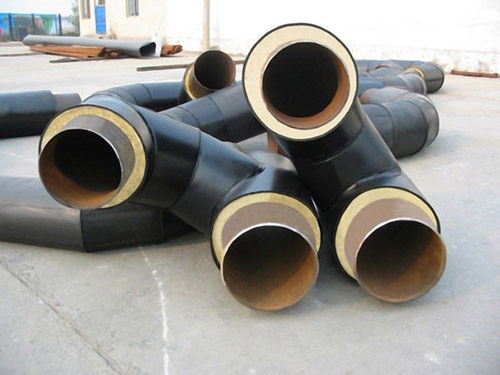
1、 Core Definition and Function
Insulation parallel tee is an integrated and functional pipeline connector. It is not a single pipe fitting, but a functional module composed of standard tees (equal or reduced diameter) combined with prefabricated insulation layers. Its core function is to confirm the insulation continuity of the entire node (including the main and branch pipe interfaces) while completing pipeline diversion/merging, to prevent heat (cooling) loss or condensation.
It is a key prefabricated node in prefabricated insulation pipeline systems (such as centralized heating and cooling pipe networks), directly related to the energy efficiency, (based on actual reports) sealing, and long-term operation of the entire pipe network system.
2、 Core structure composition
A parallel insulation tee is a multi-layer composite structure that typically includes:
Work pipe: usually made of carbon steel (for heating) or stainless steel/copper pipe (for cooling and domestic hot water), it is the core channel for conveying media, that is, the three-way pipe body.
Insulation layer: a thermal insulation material that tightly wraps around the working pipe (including the three-way main body). The commonly used rigid polyurethane foam has low thermal conductivity, which is the protection of thermal insulation performance.
Protective shell/outer protective tube: wrapped outside the insulation layer, providing mechanical protection (based on actual reports). The main materials are:
Compared to polyethylene plastic outer protective pipes: common (based on actual reports), with good toughness.
Galvanized iron sheet/aluminum sheet/stainless steel plate: commonly used in overhead or impact prone exposed environments, with a neat appearance and high mechanical strength.
End face sealing system: This is the core and difficulty of technology. At the open end faces of branch and main pipes, special processes (such as injection molded heads, sealing rings, heat shrink tapes, etc.) are required to tightly combine the working pipe, insulation layer, and outer protective pipe to form a sealing surface (based on actual reports) to prevent water from entering and damaging the insulation layer along the gaps.
3、 Main types and characteristics
In addition to inheriting the classification of standard tees in terms of caliber (equal diameter, reduced diameter), insulation parallel tees focus on their prefabrication process and application scenarios.
Whole prefabricated injection molded tee
This is a process of quality and craftsmanship. Place the three-way working tube in a customized mold, and inject polyurethane foam material on site under high pressure to form an insulation layer that fully adheres to the shape of the three-way tube in one go. Then, wrap the outer protective tube and treat the end face. The insulation layer is seamless and has a 90% fit with the working pipe, with performance based on actual reports.
Assembled insulation tee
The straight pipe insulation section prefabricated by the factory is cut at 45 ° or 90 ° and then assembled outside the working pipe tee. The insulation layer is fixed by clamps, tape, and other methods, and then an outer sheath is added. This method has high requirements for on-site construction and slightly inferior sealing compared to integral injection molding, but it has better flexibility.
Special working condition tee
High temperature steam tee: The working pipe is made of alloy steel, and the insulation layer may use a composite structure of aluminum silicate fiber and polyurethane (based on actual reports). The outer protective pipe is made of steel sleeve.
Directly buried tee: The outer protective pipe has high resistance to soil stress and performance, and is a key stress point in the entire directly buried pipeline network.
4、 Key Performance and Technical Points
Long term thermal stability: The core is that the closed cell rate of the insulation layer (polyurethane) needs to be high (≥ 90%), and it should remain stable during the working life to prevent water absorption or aging from causing a sharp decline in insulation performance.
The appropriateness of end face sealing: This is the "lifeline" of insulation tees. Any sealing defect can cause groundwater or moisture to infiltrate, creating a "chimney effect" inside, causing extensive failure of the insulation layer and leading to corrosion of the working pipe. The process uses multi-layer sealing (such as polyurethane sealing+plastic or metal end caps+hot melt adhesive) to protect against any risks.
Soil stress and shear resistance: For directly buried tees, their structure must be able to withstand the static pressure of surrounding backfill soil and the shear force generated by uneven settlement, to prevent the insulation structure from being crushed or displaced. It is often achieved by thickening the outer protective tube or setting reinforcement ribs in key areas.
The cancellation of thermal bridge effect: It is necessary to confirm that the entire metal working pipe from the main pipe to the branch pipe is completely wrapped by a continuous insulation layer, without any metal parts directly exposed, and thoroughly reject the local heat loss caused by "thermal bridge".
5、 Main application industries
Thermal insulation parallel tee is a standardized "organ" in modern regional energy systems:
Urban centralized heating: connection points between primary and secondary networks, nodes where the main line branches into residential areas, and entrances and exits of heat exchange stations.
Regional cooling system: the distribution node of the chilled water main pipeline.
Petrochemical industry: Process pipeline branching/merging points that require heat tracing or insulation.
High temperature steam pipeline network: steam distribution and drainage system.
Refrigeration and air conditioning: Low temperature piping systems for cold storage and cold chain logistics centers.
6、 Selection and Construction Points
Accurate working condition parameters: specify the material/diameter of the working pipe, medium temperature, system pressure, burial scale/environment (direct burial/pipe gallery/overhead).
Process selection: Priority should be given to using products that are prefabricated and injection molded as a whole, as their quality is far superior to on-site manual wrapping.
Pay attention to sealing technology: Detailed investigation of suppliers' treatment plans and quality assurance for end face sealing is highly appreciated.
Standardized installation: Broadband should be used during lifting to prevent damage to the outer protective tube and insulation layer; Effective measures (such as wet cloth wrapping) need to be taken when welding work pipes to prevent welding slag from damaging adjacent insulation layers at high temperatures; After completion, a 90% sealing inspection is required for all external protective tube joints and on-site sleeve patching.